PHOTOPOLYMER ADDITIVE MANUFACTURING

SLA 3D Printing Services — Precision Surface Finish

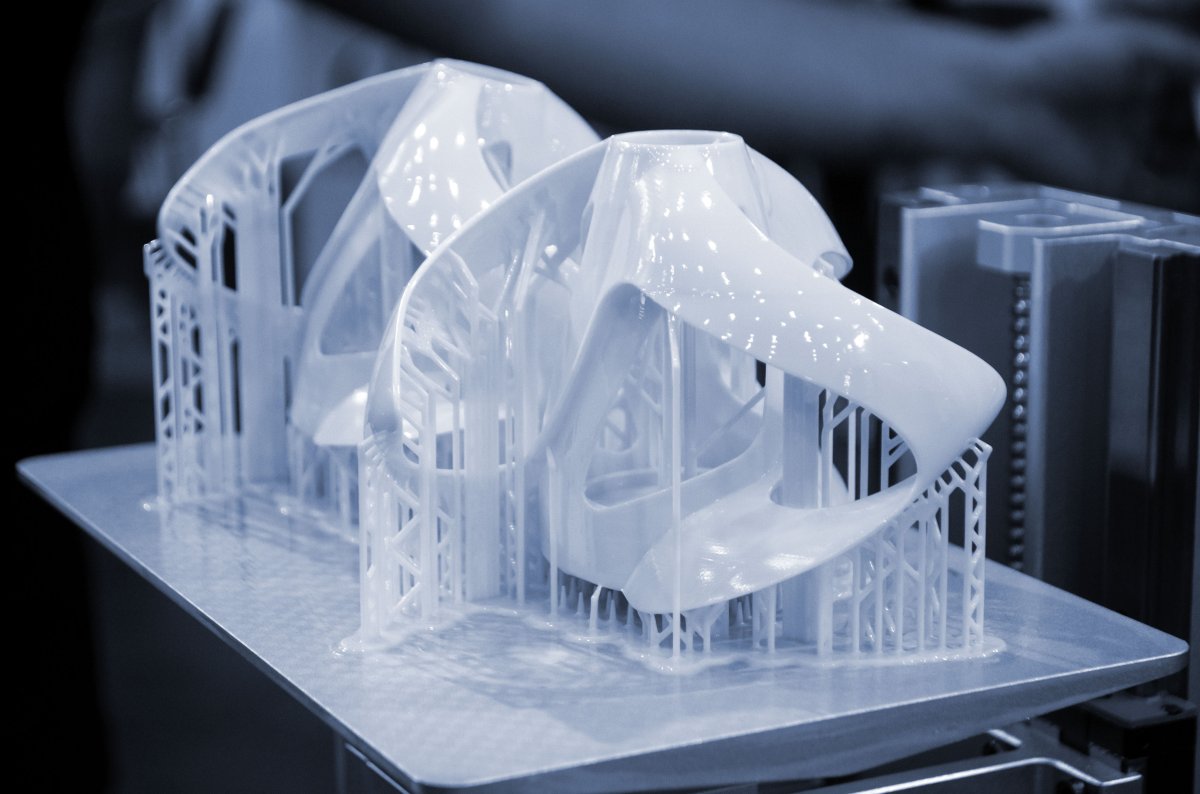
Stereolithography delivers micro-detail, smooth surfaces and tight tolerances from a broad range of engineering photopolymers. The benchmark process for visual prototypes, functional models and investment casting patterns.
25μm
Min Layer
800mm
Max Build
10
Resins
3–5
Day Lead Time
SLA 3D Printing

The right technology, matched to your part

SLA uses a UV laser to cure liquid photopolymer resin layer by layer, producing parts with near-injection-moulded surface quality, complex internal features and feature resolution down to 0.1mm. It is the preferred process when surface aesthetics, fine detail or transparent/translucent properties are required.

✓ Smooth As-Built Surface
Ra 0.2–1.6µm without sanding — ideal for visual and presentation models.
✓ Micro-Detail Accuracy
Feature resolution to 0.1mm. Fine text, thin walls, delicate geometries reproduced faithfully.
✓ Broad Resin Range
10 engineering resins covering rigid, flexible, castable, high-temp, and dental/medical grades.
✓ Large Format Builds
Build volumes up to 800×800mm for large patterns, housings and display models.

Machine Specifications

Parameter Specification
Max Build Volume Up to 800 x 800 x 550 mm (platform dependent)
Layer Thickness 0.025 – 0.150 mm
Dimensional Accuracy ±0.1 mm or ±0.1% (whichever greater)
Minimum Wall Thickness 0.5 mm (recommended 0.8 mm)
Surface Finish (Ra) 0.2 – 1.6 µm (top surfaces, as-built)
Standard Lead Time 3 – 5 business days
Specialty Resin Lead Time 5 – 8 business days
Accepted File Formats STL, STEP, OBJ, 3MF, IGES

Industry Applications

Aerospace & Defence
  • Aerodynamic wind tunnel models
  • Cabin interior fit-check parts
  • Conformal ducting prototypes
  • UAV structural prototypes
Medical & Dental
  • Surgical planning models
  • Dental study & drill guides
  • Anatomical patient models
  • Medical device housings
Industrial & Consumer
  • Investment casting patterns
  • Electrical enclosures & covers
  • Consumer product appearance models
  • Lens & optic prototypes
Automotive
  • Interior trim appearance models
  • Light guide & lens prototypes
  • Brake calliper & bracket patterns
  • Ergonomic grip validation

SLA Resin Library

10 engineering resins covering every application from visual models to castable patterns and high-temperature functional parts.

KS408A — Standard White
General-purpose rigid white resin. Excellent dimensional accuracy and smooth surface for visual prototypes and functional models.
RigidWhite3–5 days
KS608A — Standard Grey
Rigid grey resin ideal for engineering parts and functional assemblies. Paints and post-processes readily.
RigidGrey3–5 days
KS808-BK — Standard Black
Opaque black rigid resin for consumer electronics and automotive interior prototypes requiring a premium dark finish.
RigidBlack3–5 days
KS158T — Translucent
Water-clear translucent resin for light guides, fluidic microchannels and display covers. Polishable to optical clarity.
TranslucentRigid3–5 days
KS198S — Flexible
Rubber-like flexible photopolymer for gaskets, seals, grips and living hinges. Good tear resistance and elongation.
Flexible5–8 days
KS1208H — High Temperature
High heat deflection (>200°C) for functional testing in elevated temperature environments, under-bonnet prototypes and tooling masters.
High Temp5–8 days
KS168C — Castable
Clean-burnout castable resin for direct investment casting. Zero ash residue enables fine jewellery and precision metal casting from SLA patterns.
Castable5–8 days
SOMOS 9120 — Flexible Clear
Translucent flexible resin combining optical clarity with rubber-like flex. Ideal for medical tubing models, wearable components and soft-touch prototypes.
FlexibleTranslucent5–8 days
Somos Imagine 8000 — Colour
Full-colour capable photopolymer. Used for consumer product colour studies, packaging prototypes and marketing display models.
Colour5–8 days
Somos WaterShed XC 11122
Water-clear ABS-like resin with excellent toughness. Polishes to optical clarity. Preferred for clear enclosures, lenses and functional transparent assemblies.
ClearABS-like5–8 days
GORDART 8228 — ABS-Like
High-impact ABS-simulating resin with superior toughness vs standard SLA resins. Used for snap-fit testing, functional assemblies and parts requiring drop-test durability.
ToughABS-like5–8 days

From File to Finished Part in 5 Steps

Full traceability from CAD upload to QA sign-off and dispatch.

1
Upload & Quote
Submit STL/STEP. Receive detailed quote with DfAM feedback.
2
Build Preparation
Support generation, orientation optimised for surface quality and resin efficiency.
3
SLA Print
UV laser cures resin layer by layer at 25–150µm resolution.
4
Post-Cure & Finish
Solvent wash, UV post-cure, support removal. Sanding, painting or coating as specified.
5
QA & Dispatch
Dimensional inspection, job card sign-off. Packed and dispatched with tracking.

What Clients Say About Our Service

We work with engineers, designers and procurement teams across Australia every day.

★★★★★

"I would highly recommend Pratik at 3D Printing — with his analytical mind he helped re-engineer a component for an electric scooter. The final design was cost effective, strong and an exact fit."

SE
Simon Edmondson-Clark
Verified Google Review
★★★★★

"Can't speak more highly of this Company. They overcame many difficulties through their tenacity and patience. I highly recommend this company for any 3D prototyping, design or development of your idea."

CK
Cameron Kent
Verified Google Review
★★★★★

"Great service, quick turnaround — I needed parts scanned, a couple of design changes and printed. All done quickly, efficiently and A+ quality. Definitely recommend the team at 3D Prototyping."

LT
Laura T
Verified Google Review
★★★★★

"It was a pleasure dealing with 3D Prototyping. They are professional and their customer service is excellent. I would recommend these guys any time over any other players in this industry."

RB
Richard Bierhuizen
Verified Google Review
★★★★★

"This Company is good, efficient and easy to deal with. Their advice and knowledge around materials really helped us get what we needed. Great service provided. We will certainly use this company again."

JW
James Watts
Verified Google Review

Request a Quote

Upload your CAD file and tell us what you need. We respond with a detailed quote — usually same business day.

We respond to all enquiries within 1 business day. Your data is kept confidential.

Frequently Asked Questions

What is SLA 3D printing and how does it work?

SLA (Stereolithography) uses a UV laser to selectively cure liquid photopolymer resin in a vat, building parts layer by layer from 25 to 150 microns thick. The result is parts with exceptionally smooth surfaces, fine feature resolution and tight dimensional accuracy — typically ±0.1mm. After printing, parts undergo solvent washing and UV post-curing to achieve full mechanical properties.

How does SLA compare to SLS and FDM?

SLA produces the smoothest surfaces and finest detail of any FFF/vat process, making it ideal for visual models, master patterns and medical models. SLS produces stronger, more isotropic engineering parts in nylon without supports — better for functional and production use. FDM is fastest and cheapest for large structural prototypes but produces visible layer lines. Choose SLA when surface finish and detail are the priority.

Which resin should I choose?

For standard visual prototypes: KS408A (white), KS608A (grey) or KS808-BK (black). For transparency: KS158T or Somos WaterShed XC 11122. For flexible parts: KS198S or SOMOS 9120. For high-temperature applications (>200°C): KS1208H. For investment casting: KS168C. For tough/ABS-like: GORDART 8228. Not sure? Tell us your application and we'll recommend the right resin.

What post-processing options are available?

All SLA parts include standard IPA wash and UV post-cure. Additional options include support sanding, primer and paint (RAL/Pantone matched), clear lacquer for transparent parts, polishing to optical clarity for VeroClear-equivalent resins, and insert installation (heat-set M2–M8). Specify your finishing requirements in the enquiry form.

What file format do I need to supply?

STL is the standard format. We also accept STEP, OBJ, 3MF and IGES. For assemblies, supply individual STL bodies or a STEP assembly file with clearly named components. Ensure your file is watertight (manifold) with wall thickness above 0.5mm. Our team will check your file for printability before quoting and flag any issues.

©2026 All rights reserved

Web Development & Hosting Company FatGalah