PolyJet simultaneously jets and cures multiple photopolymers in a single build — combining rigid, flexible and transparent materials at 16μm resolution. Ideal for appearance models, overmoulded assemblies and medical devices.
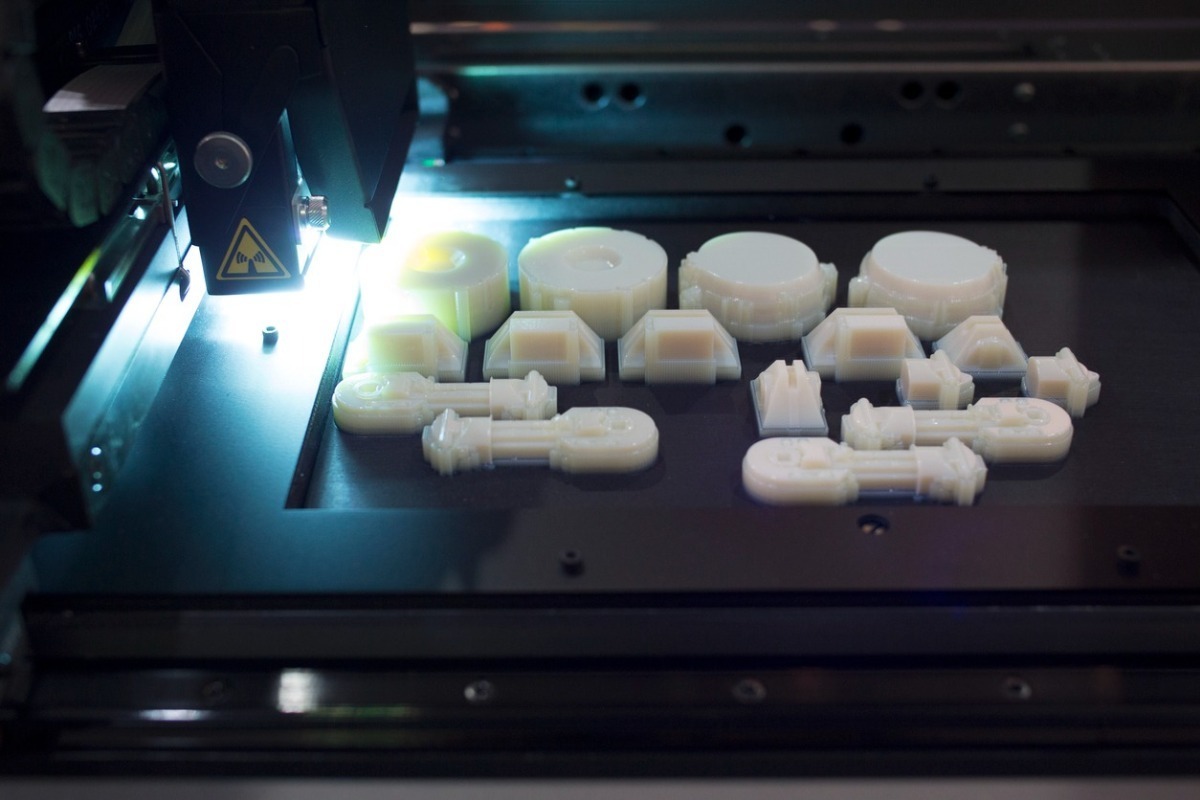
No other AM process delivers the combination of surface smoothness, material diversity and fine detail that PolyJet achieves. The go-to technology when appearance and tactile fidelity matter as much as function.
At 16µm layer thickness, PolyJet produces parts with near-injection-moulded surface quality. Fine text, living hinges, snap details, and curved organic surfaces are reproduced with exceptional clarity.
Rigid and flexible materials can be jetted simultaneously into a single part — simulating overmoulded rubber-on-plastic, creating Shore A gradients within a single component, or combining clear and opaque zones.
Stratasys J-Series platforms jet CMYK + white + clear simultaneously, producing over 360,000 colour combinations with smooth gradients. Ideal for packaging mockups, consumer product renders and marketing models.
Parts come off the machine with Ra values of 1–2µm. No sanding required for presentation models. Support material is removed with water jetting, leaving clean, smooth surfaces on even the most complex undercuts.
Design verification of two-shot and overmoulded assemblies without tooling. Combine Digital ABS with Agilus30 to replicate the look, feel and functional test of rubber-on-plastic in a single PolyJet build.
Biocompatible PolyJet resins (MED610, MED630) enable surgical planning models, dental study models, anatomical phantoms and patient-specific guides with tissue-like translucency and precise dimensionality.
PolyJet excels wherever surface quality, colour accuracy and material versatility are the deciding criteria.
Rigid, flexible, transparent and biocompatible photopolymers — combinable within a single build.
Lead Times: Standard Vero and Agilus builds ship in 3–5 business days. Biocompatible MED610/MED630 materials and full-colour J-Series builds require 5–8 business days. Contact us to discuss your timeline.
Precision from file to finished model — with full material and quality traceability.
STL/STEP submitted and reviewed. Multi-body assemblies prepped for multi-material assignment.
Rigid, flexible and clear zones assigned per body. Shore A gradient profiles set where specified.
Printheads jet photopolymer droplets at 16µm resolution. UV cured layer by layer. Gel-like support material fills all cavities.
Water-jet washing dissolves gel support. Leaves clean, smooth surfaces with no tool marks or witness lines.
Dimensional check, colour and material verification, job card sign-off. Packed and dispatched with tracking.
We work with engineers, designers and procurement teams across Australia every day.
"I would highly recommend Pratik at 3D Printing — with his analytical mind he helped re-engineer a component for an electric scooter. The final design was cost effective, strong and an exact fit."
"Can't speak more highly of this Company. They overcame many difficulties through their tenacity and patience. I highly recommend this company for any 3D prototyping, design or development of your idea."
"Great service, quick turnaround — I needed parts scanned, a couple of design changes and printed. All done quickly, efficiently and A+ quality. Definitely recommend the team at 3D Prototyping."
"It was a pleasure dealing with 3D Prototyping. They are professional and their customer service is excellent. I would recommend these guys any time over any other players in this industry."
"This Company is good, efficient and easy to deal with. Their advice and knowledge around materials really helped us get what we needed. Great service provided. We will certainly use this company again."
Upload your CAD file and tell us your material and finish requirements. We'll respond with a detailed quote — usually same business day.
Both produce smooth, high-detail parts. PolyJet's key advantages are multi-material capability (rigid + flexible in one build), finer layer resolution (16µm vs 25–50µm for SLA) and water-washable gel support that leaves no tool marks. SLA offers greater material variety including engineering resins and larger build volumes. For appearance and overmould prototypes, PolyJet is typically the superior choice.
PolyJet photopolymers are UV-stable during printing but can degrade with prolonged UV exposure or elevated temperatures. They are best suited to functional validation prototypes rather than long-term end-use parts. Digital ABS Plus and Agilus30 can sustain moderate functional loads. For high-temperature or long-duration functional applications, SLS or DMLS is typically recommended.
For multi-material builds, supply separate STL bodies for each material zone, or a single STEP/assembly file with distinct bodies clearly named by material. Our team will contact you to confirm material assignments before printing. For full-colour parts, VRML (.wrl) with embedded colour texture is the preferred format.
As-built VeroClear has a slight milky haze from support material residue. We perform wet sanding (400–2000 grit) and plastic polish as standard for transparent parts. For optical-grade clarity, request our premium polishing option. Wall thicknesses above 3mm produce the best optical results; very thin walls may appear frosted.
Stratasys MED610 and MED630 are ISO 10993-certified biocompatible materials suitable for short-term skin and mucosal contact (up to 24 hours). They are used for surgical guides, dental models and medical device prototypes. These materials require specialist handling — contact us to discuss your biocompatibility and sterilisation requirements before ordering.
©2026 All rights reserved
